Math performance is at a crisis point in our nation. Alliance’s high-dosage math tutoring counteracts these systemic challenges to build long-term math proficiency.
The majority of US middle school students are not proficient in math, partially due to educational scaffolding gaps caused by COVID-19. Though Alliance scholars regularly outperform peers on standardized tests, many Alliance scholars still struggle in math and are several years behind the pace for their grade level.
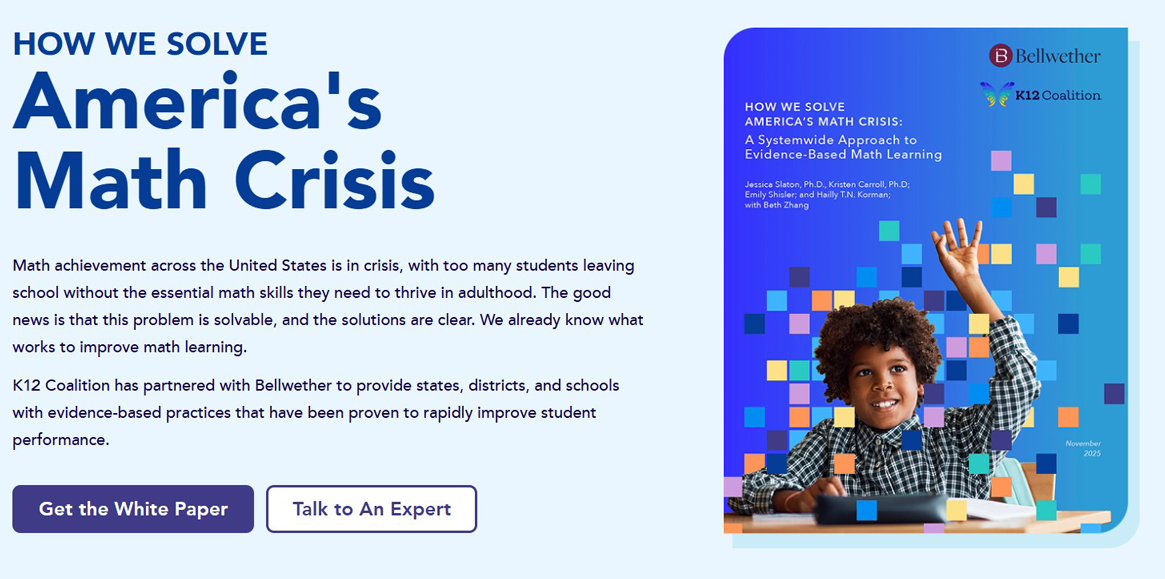
Bellwether, a national nonprofit organization dedicated to analyzing and amplifying best practices in education, released the report How We Solve America’s Math Crisis in collaboration with K12 Coalition.
It outlines major challenges in math education:
- Out of 37 nations, the US ranks 28th in math literacy.
- Math scores declined in 43 states between 2019 and 2022.
- Only 26% of 8th graders are proficient in math.
The report recommends an evidence-based approach to increasing math literacy. This includes building math identity, creating learning paths that progress logically to deepen knowledge over time, and balancing the understanding of concepts with real-world application.
Alliance has already implemented a network-wide high-dosage tutoring initiative using the same approaches that this report outlines. The program began as a remote partnership in the 22-23 school year. It has grown to a blended offering where 3 schools have elected virtual tutoring and 23 schools offer in-person tutoring. 1,755 scholars participated in the program this year, meeting with tutors up to two to three times a week.
This program raises qualitative and quantitative math outcomes. Math scores are rising across all grade levels, as measured by the state SBAC assessment and iReady growth metrics. School leaders report that scholars are more engaged and have a growth mindset, which has a direct impact on math scores, opening growing STEM career pathways to our students.